
Partners
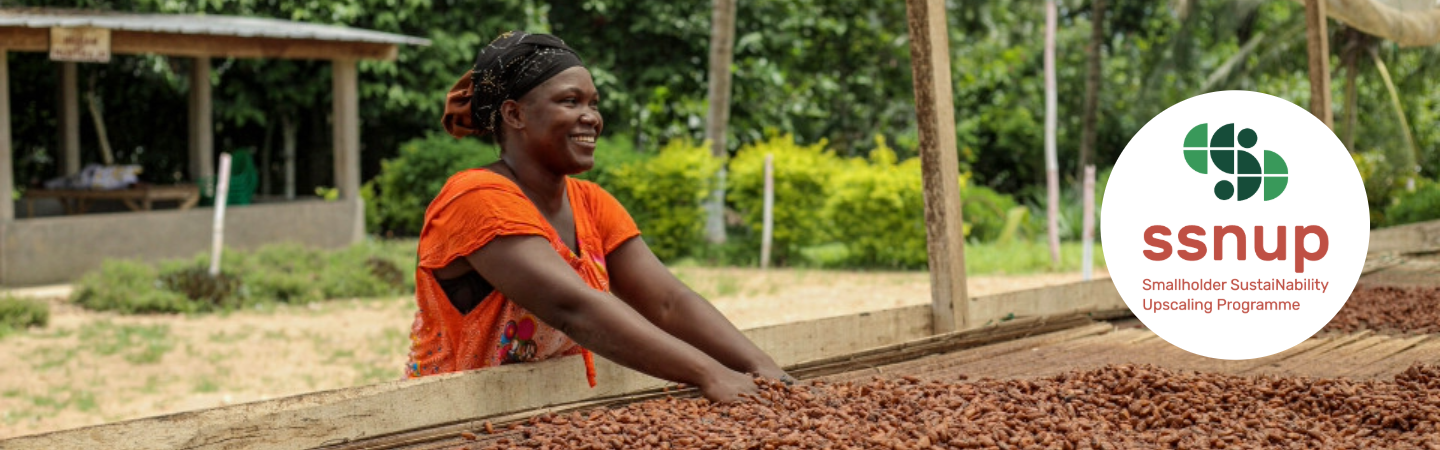
The SSNUP programme leverages the knowledge and expertise of multiple technical assistance facilities of impact investment funds to reach as many smallholder farmers with as little bureaucracy as possible. While SSNUP is supported by the governments of Luxembourg, Switzerland and Liechtenstein, ADA coordinates the programme and ensures knowledge sharing and the dissemination of best practices amongst the participating investors and their partners for the benefit of the agricultural sector as a whole. Click on the titles below for a detailed overview of all the SSNUP partners.
Investors wishing to join the SSNUP programme are kindly requested to contact: ssnup@ada-microfinance.lu
AgDevCo
AgDevCo is an investment company dedicated to developing African agriculture through investments in agribusinesses. Its vision is a thriving commercial African agriculture sector that benefits both people and planet by investing in and supporting agribusinesses to grow, create jobs, produce, and process food and link smallholder farmers to markets. AgDevCo supports its partners to work towards climate sustainability, and where possible, regenerative solutions. AgDevCo provides investment capital and technical assistance (TA) to grow sustainable and impactful businesses across the agricultural value chain. Key themes of its TA are smallholder inclusion, gender equality and climate resilience. The company was established in 2009 with the UK Government being a long-term supporter and major funder. It has around 40 companies in its current portfolio spread over eleven countries in Sub-Saharan Africa, with the biggest exposure in Mozambique, Malawi, Kenya, Cote d’Ivoire and Zambia. AgDevCo invests across the agricultural value chain including inputs, primary production and logistics in lower and lower-middle income Sub-Saharan African countries.
Alterfin
Alterfin cv/sc (Alterfin) is a Belgian financial cooperative created in 1994 raising capital to invest in smallholder farming in developing countries via microfinance institutions, small and medium enterprises (SMEs) and producer’s organizations. Alterfin’s goal is to improve the livelihoods and living conditions of socially and economically disadvantaged people and communities, predominantly in rural areas in low and middle-income countries. Active in over 30 countries in Latin America, Africa, Central and South-East Asia with 5 regional offices (Peru, Bolivia, Honduras, Kyrgyzstan, Kenya). Since 1994, Alterfin has financed the development of social enterprises around the world to provide a sustainable income for the most vulnerable people. With the financial support of over 6,000 co-op members, we help more than 4 million families make a decent living, all while having a positive impact on our planet.
Balim Investment
Balim Investments AG is an impact venture founded in 2024 by HEKS/EPER, Somaha Foundation, and iGravity. It builds on a portfolio of loans from a pilot project launched in 2021. Balim’s main goal is to improve rural livelihoods by providing loans and technical assistance to African companies in the agriculture, water and energy sectors. The company has a strong presence in several rural regions of Uganda and Senegal and has been expanding to Kenya and Tanzania since 2025, where access to finance is still limited but impact opportunities are big. By addressing the SME financing gap, Balim mainly supports businesses in rural areas which face difficulties in accessing traditional financial services.
Grameen Crédit Agricole Foundation
Created in 2008 under the joint leadership of Crédit Agricole S.A. and Professor Yunus, 2006 Nobel Peace Prize laureate and founder of Grameen Bank, the Grameen Crédit Agricole Foundation is a multi-business operator whose mission is to contribute to the fight against poverty and inequality by promoting financial inclusion and social impact entrepreneurship. As an investor, lender, technical assistance coordinator and fund advisor, the Foundation finances and supports microfinance institutions, businesses and projects that promote inclusive finance and the development of rural economies in nearly 40 countries in Sub-Saharan Africa, South Asia, Central Asia, Eastern Europe and the MENA region. The GCA Foundation primarily targets microfinance institutions serving women and rural populations.
Incofin
Driven by a strong interest in investment solutions that promote inclusive progress and sustainable transitions, Incofin IM offers private debt and equity financing to businesses in emerging markets, along with technical assistance. We have invested over USD 4.4 billion in 75 countries, focusing on financial inclusion, agri-food, and clean drinking water. Managing ~USD 1.1 billion in AuM across 8 proprietary funds, we provide advisory services to 4 funds, generating strong risk-adjusted returns. With 20+ years of experience, we have closed over 2,300 investment transactions. Our full-service platform includes in-house teams for investment, risk, impact, technical assistance, finance, legal, compliance, and investor solutions. With offices in Belgium, Colombia, India, and Kenya, our 90+ team members, 60% of whom are in emerging markets, ensure high-quality client services. We contribute to financial inclusion, sustainable agriculture, and access to safe drinking water.
Through our targeted sectors, we are proud to contribute to the financial inclusion of 32 million entrepreneurs, sustainable agriculture for 555,000 smallholder farmers, and access to 20 billion litres of safe drinking water for 30 million people by 2030.
IETP - Investisseurs & Partenaires
Investisseurs & Partenaires (I&P) has been committed to facilitating access to finance for African SMEs for more than 20 years. I&P’s activities are built around three core pillars: directly financing and supporting entrepreneurs (seed funding and private equity), backing and developing African investment teams (sponsor fund and fund of funds) and strengthening the entrepreneurial ecosystem. The investment teams partnering with I&P - Sinergi Niger, Néré Capital (Burkina Faso), Teranga Capital (Senegal), Comoé Capital (Côte d’Ivoire), Miarakap (Madagascar), Zira Capital (Mali), Inua Capital (Uganda), Fako Capital (Cameroon) and Gola Capital (Guinea) - together with I&P, are joining forces to deploy the SSNUP programme within their respective portfolios.

Oikocredit
Oikocredit is a social impact investor and worldwide cooperative with over five decades of experience in leading positive change through investments in financial inclusion, agriculture and renewable energy. Guided by the principle of empowering low-income people to improve their quality of life, Oikocredit supports partners in Africa, Asia and Latin America through loans, investments and capacity building. Oikocredit is financed by individuals and institutions who want to be part of a global movement for social change. Their investments prioritise social impact while safeguarding the environment and generating fair financial returns. It's a global organisation with local presence, able to respond to the partners’ needs and strengthen them by offering more than financing.
responsAbility
responsAbility Investments AG is an asset manager in the field of development investments and offers professionally-managed investment solutions to private, institutional and public investors. The company’s investment solutions supply debt and equity financing predominantly to non-listed firms in emerging and developing economies. Through their inclusive business models, these firms help to meet the basic needs of broad sections of the population and to drive economic development.
Shared Interest Foundation
Shared Interest Foundation (SIF), established in 2004, is a UK-based international development charity. It supports sustainable enterprise development, focusing on smallholder producers in Africa and Latin America. Its work prioritises business development, climate resilience and the empowerment of women and youth. SIF operates as the sister organisation to the ethical finance provider Shared Interest Society.

SIDI – Solidarité pour le développement et l’investissement
Created in 1983 by CCFD-Terre Solidaire, SIDI (Solidarité Internationale pour le Développement et l’Investissement) is a solidarity investor. It supports and finances economic players in developing countries, with the aim of combating economic inequality and poverty, while meeting the challenges of climate change.
SIDI is accredited by the French government as an Entreprise Solidaire d’Utilité Sociale (ESUS). The shares in its capital have been Finansol-labeled since 1997.
If today SIDI is able to support 127 partners in 33 countries, it’s because it can count on an entire ecosystem to serve its ambitions. At its heart lies the commitment of thousands of individual shareholders who want to use the power they have with their money. Most of these individual shareholders are members of the Epargne Solidarité Développement (ESD) association.
In addition, the financial support provided by the FEFISOL II fund and the ACTES foundation under the aegis of the Fondation Terre Solidaire, enables us to multiply our action with our partners, through institutional financing.
In East Africa, SIDI relies on its subsidiary Soluti Finance to provide the best possible support to its partners.
Symbiotics
Symbiotics Group, established in 2004, is the leading market access platform for impact investing, dedicated to fostering sustainable development in emerging and frontier markets. To date, we have facilitated over 7,900 private investments totaling more than USD 10 billion across 97 countries, alongside more than USD 18 million in consulting and technical assistance to support fragile and high-risk contexts.
Our investment focus spans financial inclusion, SME development, sustainable agriculture, climate and energy and technology-driven business models. With a team of over 180 professionals across 10 offices globally, we offer deep market insight and strong local presence.
Symbiotics Group operates through four distinct business lines—Symbiotics Investments, Symbiotics Asset Management, Symbiotics Capacity Building, and Symbiotics Fund Solutions—enabling us to deliver tailored and integrated impact investment solutions. Our operations are anchored in rigorous impact protocols and ESG standards, reinforcing our ability to mobilize, deploy, and manage capital with responsibility and effectiveness.
ADA - Appui au Développement Autonome
ADA is a Luxembourgish NGO which plays a leading role in the inclusive finance sector internationally. Since 1994, ADA has been working to develop microfinance services in favor of populations excluded from the conventional banking circuits. Its action is designed to reinforce both the autonomy and capacities of microfinance institutions (MFIs), professional associations and networks. ADA also assists governments in their efforts to support and structure the microfinance sector at the regional and national level.
ADA proposes and develops specific and innovative microfinance products which have a positive impact on the life of thousands of people, organises training sessions for microfinance professionals, and provides advice and support to MFIs in their search for funding. Furthermore, ADA carries out research activities to anticipate future needs in the microfinance sector and to measure the social impact of its actions. Its flexible approach enables it to adapt each project according to the needs of its partners and the reality in the field.
The NGO operates in nearly 40 countries in Latin America, West Africa and South-East Asia.
CSAF - Council On Smallholder Agricultural Finance
Founded in 2012 as a forum for lenders to share learning, CSAF now includes 16 members and affiliates committed to market growth and impact.CSAF members convene to share learning, develop industry standards and best practices, and engage other stakeholders to address barriers to market growth and impact.
IISD – International Institute for Sustainable Development
The International Institute for Sustainable Development (IISD) is an award-winning independent think tank working to accelerate solutions for a stable climate, sustainable resource management, and fair economies. Our work inspires better decisions and sparks meaningful action to help people and the planet thrive. We shine a light on what can be achieved when governments, businesses, non-profits, and communities come together. IISD’s staff of more than 120 people, plus over 150 associates and consultants, come from across the globe and from many disciplines. With offices in Winnipeg, Geneva, Ottawa, and Toronto, our work affects lives in nearly 100 countries.
The ISSD’s Economic Law & Policy programme aims to increase the capacity of stakeholders to design, implement and advocate for policies and practices that promote sustainable economies and resource management - including responsible investment in agriculture - and improve the policy uptake of sustainable development objectives.
ADA - Appui au Développement Autonome
ADA is a Luxembourgish NGO which plays a leading role in the inclusive finance sector internationally. Since 1994, ADA has been working to develop microfinance services in favor of populations excluded from the conventional banking circuits. Its action is designed to reinforce both the autonomy and capacities of microfinance institutions (MFIs), professional associations and networks. ADA also assists governments in their efforts to support and structure the microfinance sector at the regional and national level.
ADA proposes and develops specific and innovative microfinance products which have a positive impact on the life of thousands of people, organises training sessions for microfinance professionals, and provide advice and support to MFIs in their search for funding. Furthermore, ADA carries out research activities to anticipate future needs in the microfinance sector and to measure the social impact of its actions. Its flexible approach enables it to adapt each project according to the needs of its partners and the reality in the field.
The NGO operates in nearly 40 countries in Latin America, West Africa and South-East Asia.
Ministry of Foreign and European Affairs of Luxembourg
Directorate for Development Cooperation and Humanitarian Affairs
The main objective of Luxembourg’s development cooperation is to contribute to the eradication of extreme poverty and to promote economic, social and environmental sustainability. To achieve this objective, Luxembourg will continue to promote a multi-stakeholder partnership approach in the framework of the 2030 Agenda for Sustainable Development and the Sustainable Development Goals. Luxembourg aims, in particular, at ensuring a minimum level of livelihood, in a rights-based environment, and creating equal opportunities for all, particularly for the most vulnerable and unprivileged, so everyone can actively determine the course of their own lives.
Operational aspects of Luxembourg's development cooperation are managed by LuxDev. In this function, LuxDev represents the government in the selection committees of the SSNUP programme.
Swiss Agency for Development and Cooperation
The Swiss Agency for Development and Cooperation (SDC) is the Directorate for international cooperation and humanitarian aid of the Federal Department of Foreign Affairs of Switzerland.
Swiss international cooperation, which is an integral part of the Federal Council's foreign policy, aims to contribute to a world without poverty and in peace, for sustainable development. It fosters economic self-reliance and state autonomy, contributes to the improvement of production conditions, helps address environmental problems, and ensures better access to education and basic healthcare services.
LED – Liechtenstein Development Service
The Liechtenstein Development Service (Liechtensteinischer Entwicklungsdienst, LED) is entrusted by the Government of Liechtenstein with the implementation, coordination and monitoring of bilateral development cooperation. The Liechtenstein development cooperation is geared towards the sustainable and comprehensive development of disadvantaged and marginalised regions of the world, especially rural and structurally weak regions.
The two priority themes of the LED are sustainable food systems, using agroecology as a guiding concept and microfinance as a tool, as well as vocational training and employability. Leaving no one behind, gender equality, cultural diversity and environmental sustainability are important guiding principles for all projects and partnerships of LED.
The LED is currently active in nine key countries in the following regions: Southern Africa (Zambia, Mozambique), East Africa (Tanzania), West Africa (Burkina Faso, Mali, Senegal), Latin America (Bolivia), Eastern Europe (Moldova), Southeast Asia (Cambodia). International projects are also supported by LED.